Communication

The aim of the protection of market competition is primarily to create benefits for consumers and equal conditions for all entrepreneurs on the market, who, acting in accordance with the existing rules and competing on the market with the quality, price and innovation of their products and services, contribute to the overall development of the economy.
Green Transition and Competition – Regulatory Challenges, Market Rules and a Sustainable Economy
“Green Transition and Market Competition – Regulatory Challenges, Market Rules and a Sustainable Economy” roundtable was held today in Zagreb, jointly organized by the Croatian Competition Agency (CCA) and Poslovni dnevnik. The discussion brought together representatives of regulatory bodies, government institutions, academia, and the business community to address the relationship between sustainability goals and competition policy.
It was emphasized that the green transition and effective market competition are not opposing processes. On the contrary, through competition, innovation, and clear market rules, it is possible to accelerate the transition towards a sustainable economy.
Opening remarks were delivered by the minister of environmental protection and green transition, Marija Vučković MSc, and the president of the Competition Council Mirta Kapural, PhD.
In her address, Mirta Kapural highlighted that the role of regulators is to ensure effective competition while at the same time encouraging the achievement of environmental and sustainability objectives. She stressed the importance of preventing any abuse that may be justified by reference to sustainability. While competition rules can foster innovation and the development of sustainable technologies, they do not allow practices such as price-fixing, market sharing, or the exchange of commercially sensitive information, even when such practices are presented as environmentally justified.
As a positive example, Mirta Kapural referred to an agreement among European washing machine manufacturers, who committed within an industry association to gradually phase out the least energy-efficient appliances and improve energy performance standards. The European Commission assessed this cooperation positively, noting that it resulted in significant reductions in electricity and water consumption, as well as lower costs for consumers, while preserving competition in terms of price and quality.
Marija Vučković underlined that the green transition is essential for strengthening economic competitiveness and that its success depends on knowledge, innovation, and responsible decision-making. She emphasized the importance of a clear and predictable legislative framework, including the new law on climate change and ozone layer protection, as well as ongoing preparations of legislation in the field of nature and environmental protection. She also pointed to the need to strengthen public trust and encourage investment in sustainable solutions, such as transport electrification, improved waste management, and water-saving projects, highlighting the important role of regulators in ensuring that the transition is both effective and fair.
Martijn Snoep, president of the Netherlands Authority for Consumers and Markets, emphasized that businesses bear responsibility for the broader environmental and social impacts of their operations. He noted that sustainability encompasses concern for people and the public interest, not only environmental awareness. Snoep explained that regulators provide guidance on how companies can cooperate in achieving ESG objectives without infringing competition rules, including through joint investments in renewable energy and initiatives aimed at reducing environmental impact. He also stressed the importance of promoting long-term sustainability and resilience of companies, as well as cooperation among market participants, supported by regulatory authorities that offer guidance on compliance.
Nataša Novaković, ESG Director at the Croatian Employers’ Association, pointed out that the regulatory framework in the field of sustainability is highly complex and often represents an administrative challenge for businesses. At the same time, she noted that ESG reporting increases corporate transparency, while at the European Union level a unified platform for the disclosure of sustainability data is being developed.
Ana Đanić Čeko, associate professor at the Faculty of Law, University of Osijek, emphasized that aligning the public interest in environmental protection with competition rules represents a complex legal process requiring expert analysis and careful assessment. She also highlighted the importance of developing specialized knowledge in environmental law and presented the work of the Green Legal Clinic, which enables students to gain practical experience in this field.
Nensi Šarić, attorney at law, stressed that sustainability is increasingly becoming an integral part of business and investment decision-making. Through ESG strategies, companies are more frequently managing their environmental and social impacts, as well as their business risks, which can also represent an important competitive advantage in the development of new sustainable products and business models.
The discussion concluded with the assessment that the green transition and effective competition are closely interconnected processes which, supported by clear rules and an appropriate regulatory framework, can drive innovation, investment, and the development of a sustainable economy. Participants highlighted the importance of cooperation between institutions, businesses, and the expert community in identifying solutions that simultaneously contribute to environmental protection and the preservation of competitive markets.
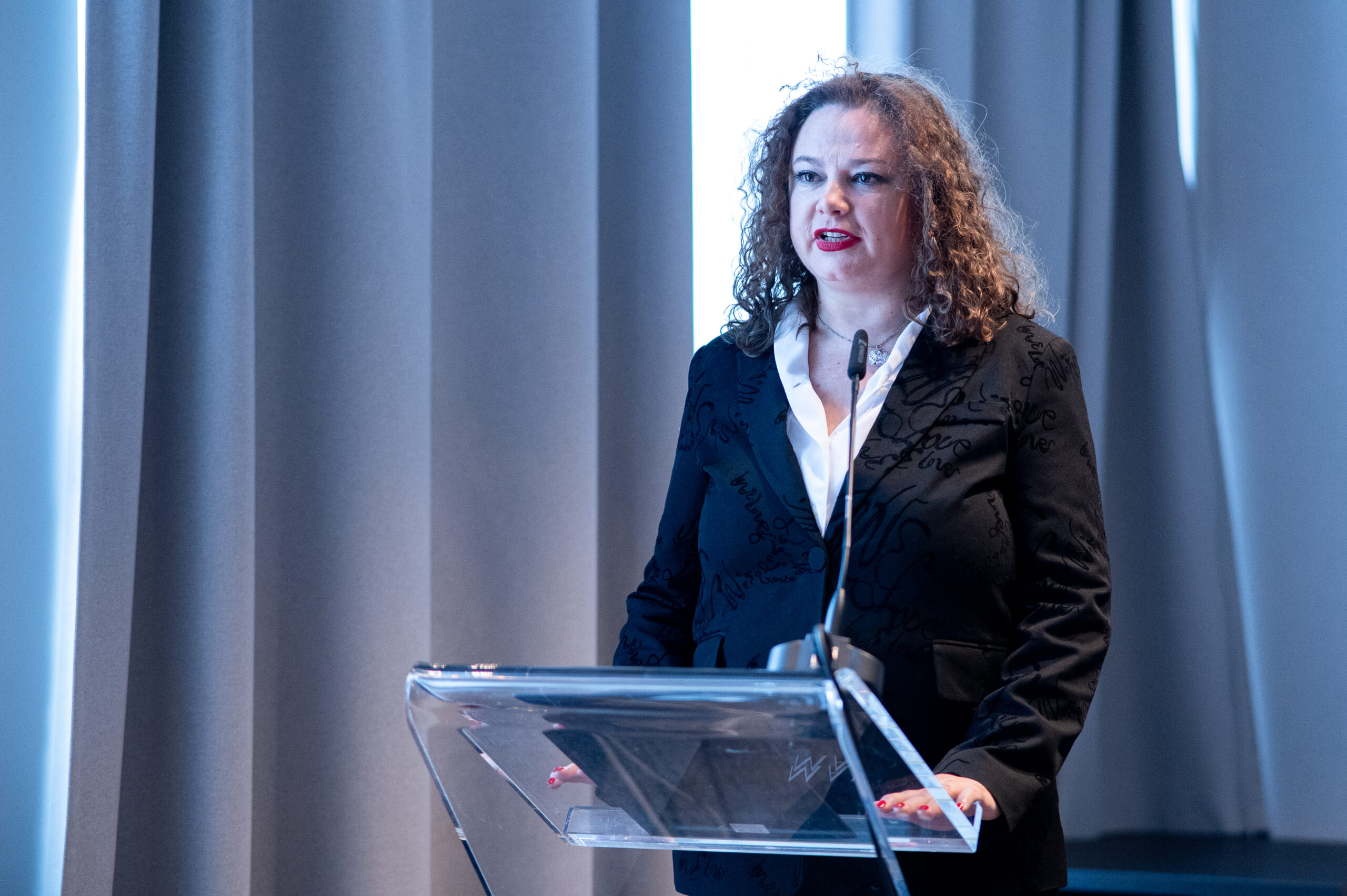

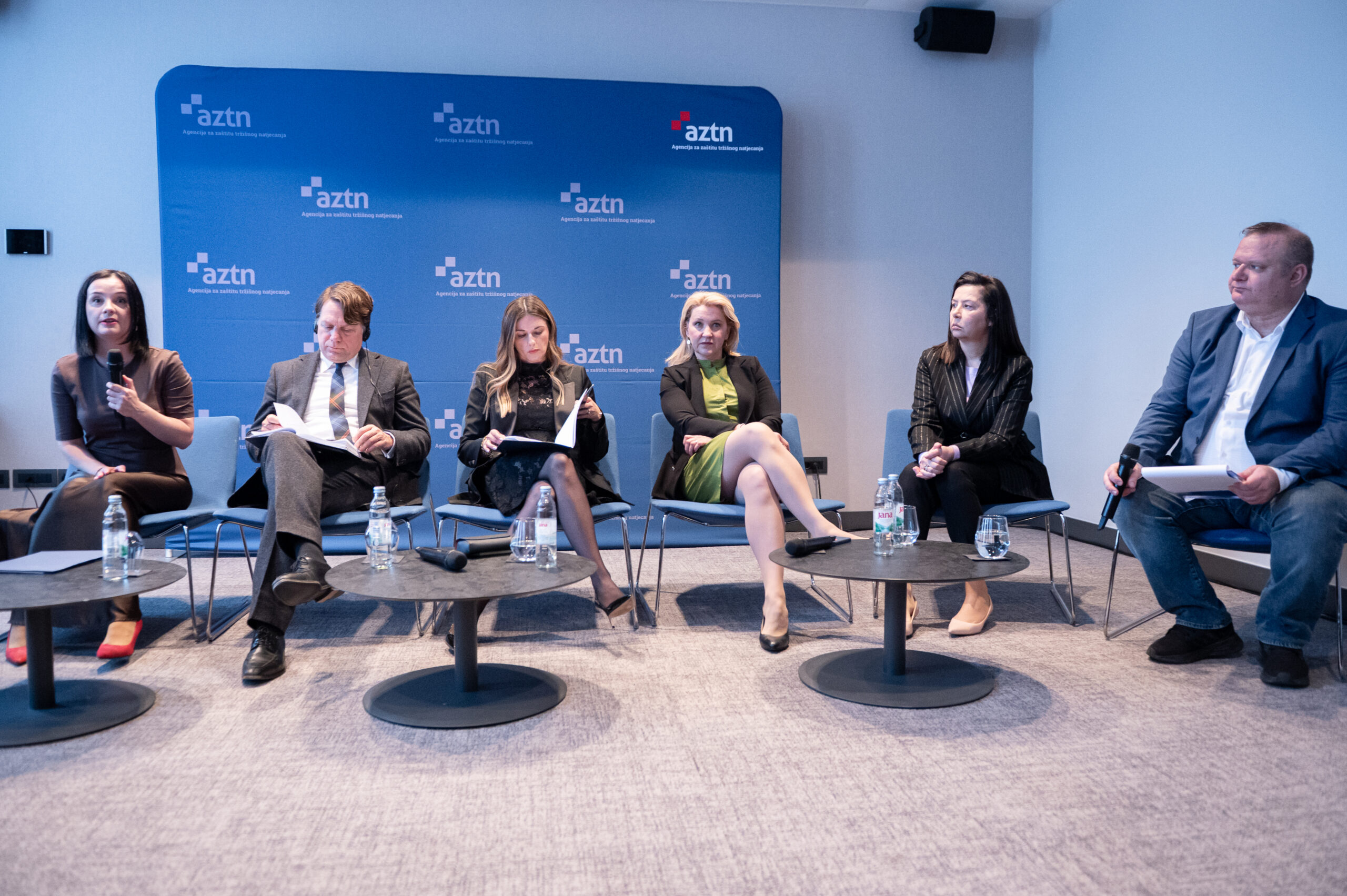


16.03.2026., Hotel International, Zagreb – Okrugli stol “Zelena tranzicija i trzisno natjecanje – regulatorni izazovi, trzisna pravila i odrzivo gospodarstvo” u organizaciji Agencije za zastitu trsisnog natjecanja i Poslovnog dnevnika. Photo: Luka Antunac/PIXSELL